
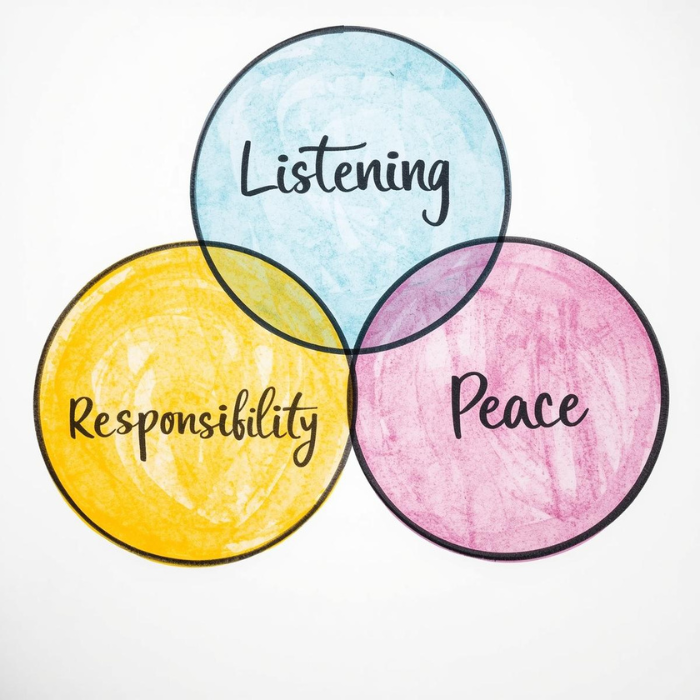
At the beginning of a new year, there is often talk of resolutions. On the surface, resolutions are simply intentions that commit us to act a little differently. Research suggests that younger people are often more optimistic about change than adults, believing more strongly that effort can lead to improvement. This sense of possibility was something I spoke to all pupils about in our first assembly of the year, challenging all those present to move away from grand gestures of change and, instead, to consider three behaviour traits that underpin a happy and healthy community.
Listening, properly, is one of the hardest things to do in a world full of constant distractions, yet it is also one of the simplest places to start when we want to make a small but meaningful change. Psychological research shows that feeling listened to is strongly associated with a sense of safety, belonging and reduced stress. Listening, done well, requires attention and presence. It slows interactions, reduces misunderstanding and supports emotional regulation. Listening is, therefore, not simply a courtesy, but a foundation for trust, wellbeing and respectful relationships within families, workplaces and schools.
Responsibility follows naturally from listening: the recognition that the actions within our control, and our choice to act with care, can develop a stronger sense of purpose. These acts do not need to be grand in scale. Taking responsibility for how we speak when under pressure, for acknowledging mistakes, for including others, or for doing the right thing even when it goes unnoticed are all examples of responsibility in action. Over time, these choices help to shape the culture of any community.
The final strand is peace, which research increasingly frames as both internal and external. Internal peace is closely linked to emotional regulation and self-compassion. Studies show that individuals who respond to mistakes with self-kindness rather than harsh self-criticism are more resilient, more motivated and better able to cope with challenge. External peace grows from this internal steadiness. Peace is not about avoiding disagreement, but about how we manage ourselves and our responses when disagreement arises.
As the year gets underway, I wish you and your families a healthy and positive start to the year ahead. If we can all give a little more attention to how we listen, take responsibility and respond with kindness, we will continue to shape a strong and supportive Rookwood community.
Paul Robinson
Headteacher

